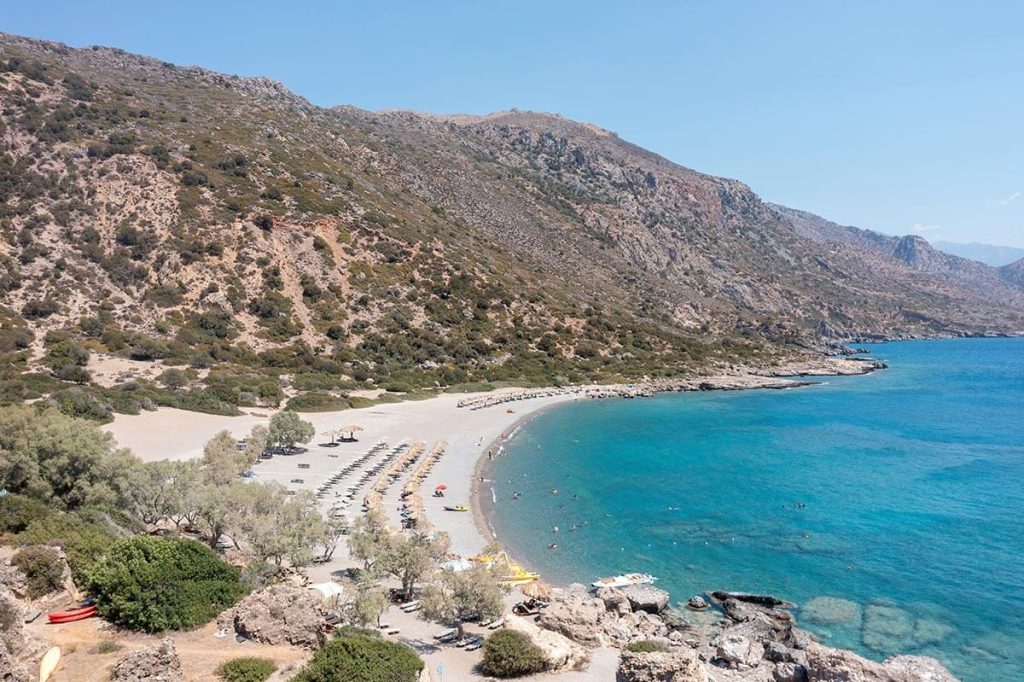
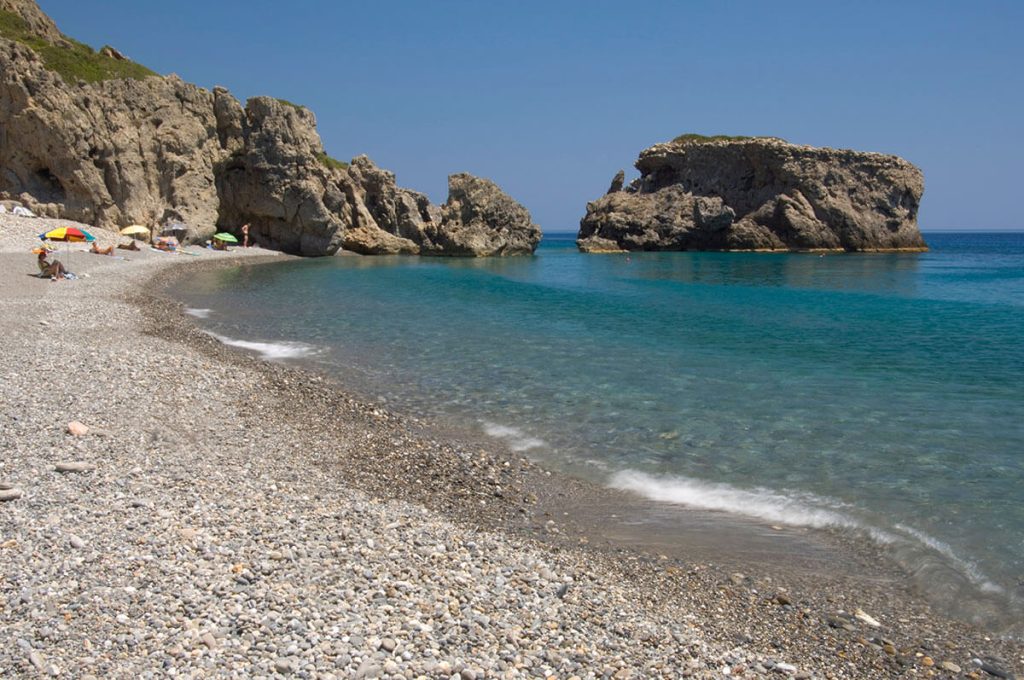
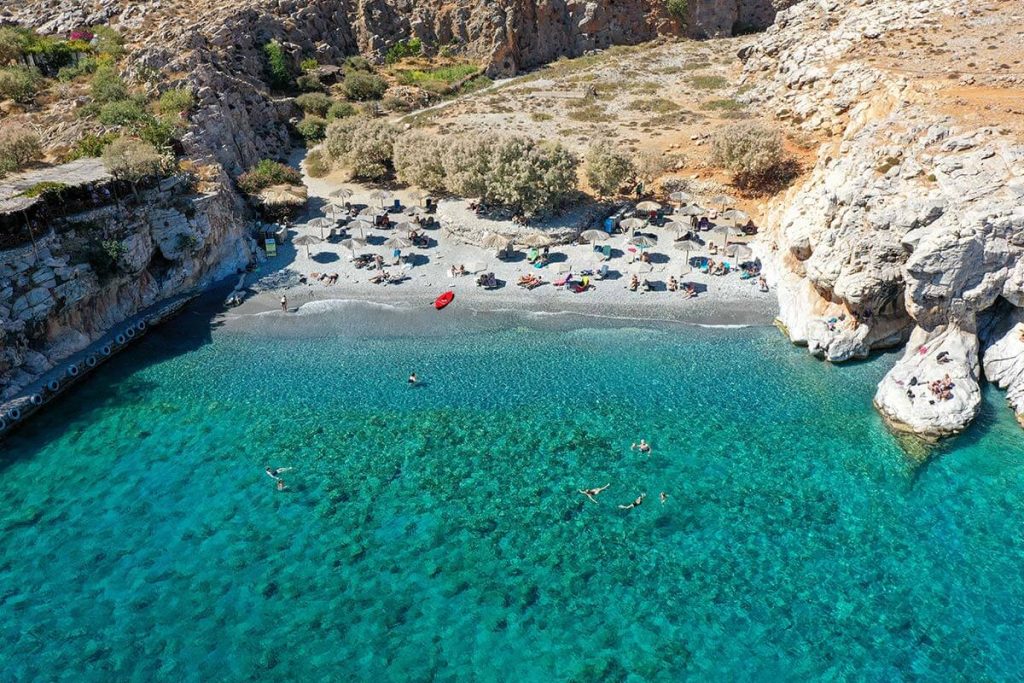
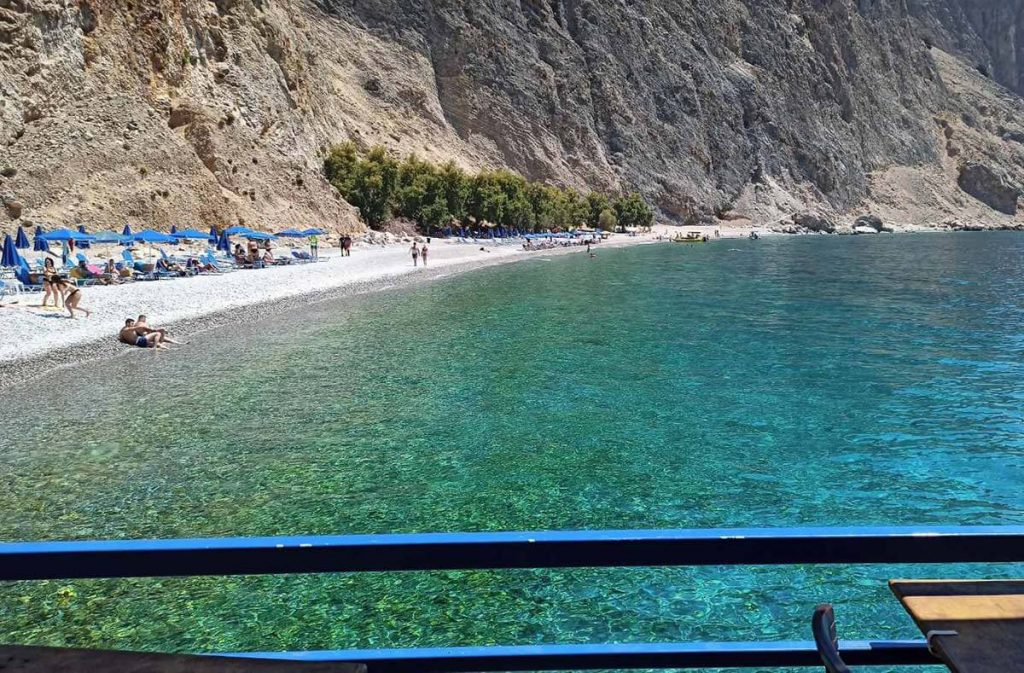
The beaches are perhaps the main reason Chania is known around the world. Some of them, such as Balos and Elafonisi, have appeared on the covers of travel magazines for decades and regularly feature on lists of the most beautiful beaches in the world.
In this guide, you’ll find the beaches I think you absolutely should visit while in Chania, along with useful information on how to get there, what facilities to expect and when it might be better to avoid them.
1. Balos
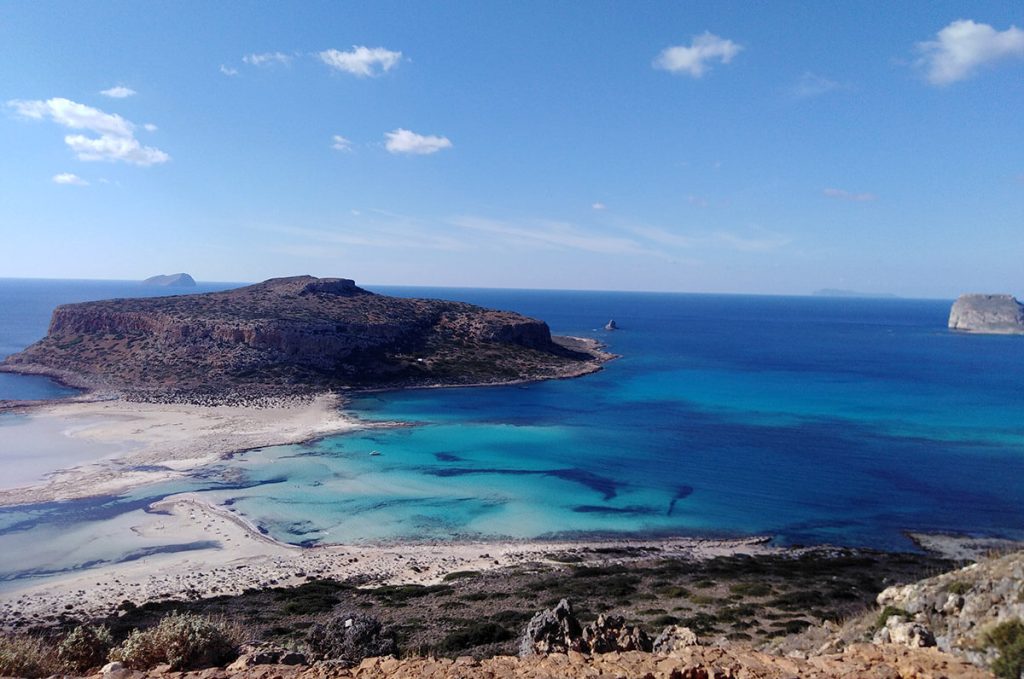
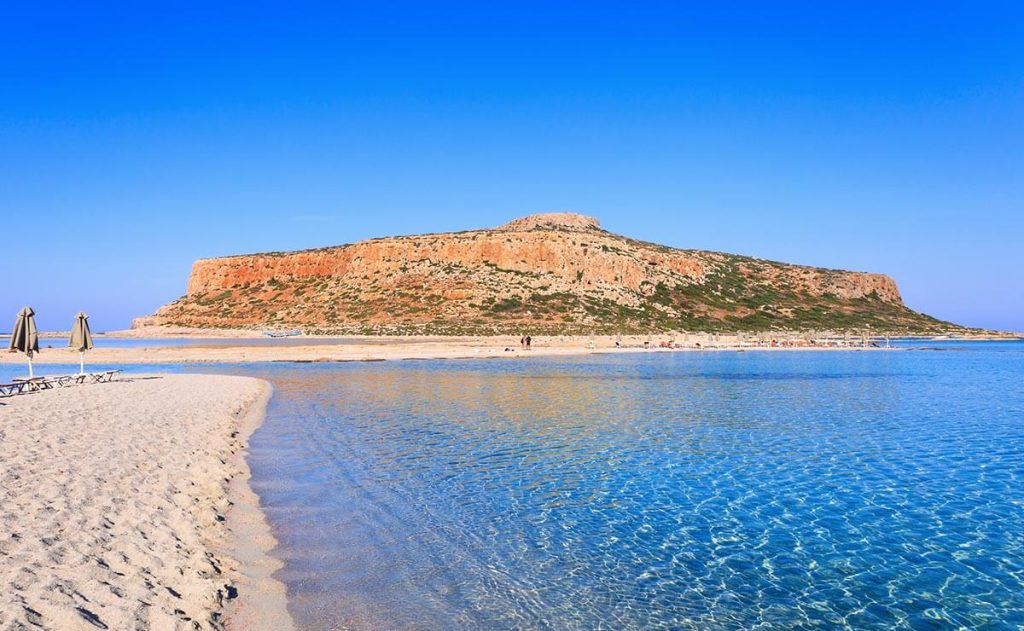
Balos is actually a lagoon, with shallow turquoise waters and white sand. In some places, you’ll also notice patches of pink sand, created by crushed coral and shells. The whole area is protected and is home to rare species of flora and fauna.
There is a small organised section with sunbeds and umbrellas, as well as a canteen. Try to arrive early in the morning, as Balos gets very busy throughout the day.
There are two ways to get to Balos: you can either drive and then hike down to the beach, or take a boat. More specifically:
- By car: The drive takes around 1.5 hours from Chania city centre. The last 7 km are on a dirt road. At the beginning of the dirt road, you’ll be asked to pay €1 per person, followed by another €3 for parking once you reach the car park (these are the current fees at the time of writing). From there, you’ll need to walk down a rocky trail to the beach, so I recommend wearing closed-toe shoes. The walk down takes less than 30 minutes, while the climb back up takes a little longer. It may sound tiring, but the view along the way makes it worth it.
- By boat: Taking a boat from Kissamos Port is a much easier and safer option. All you need to do is book your place here. You can also choose hotel pickup, so you won’t have to drive to Kissamos yourself. The trip includes a stop at Balos as well as the island of Gramvousa.
2. Elafonisi
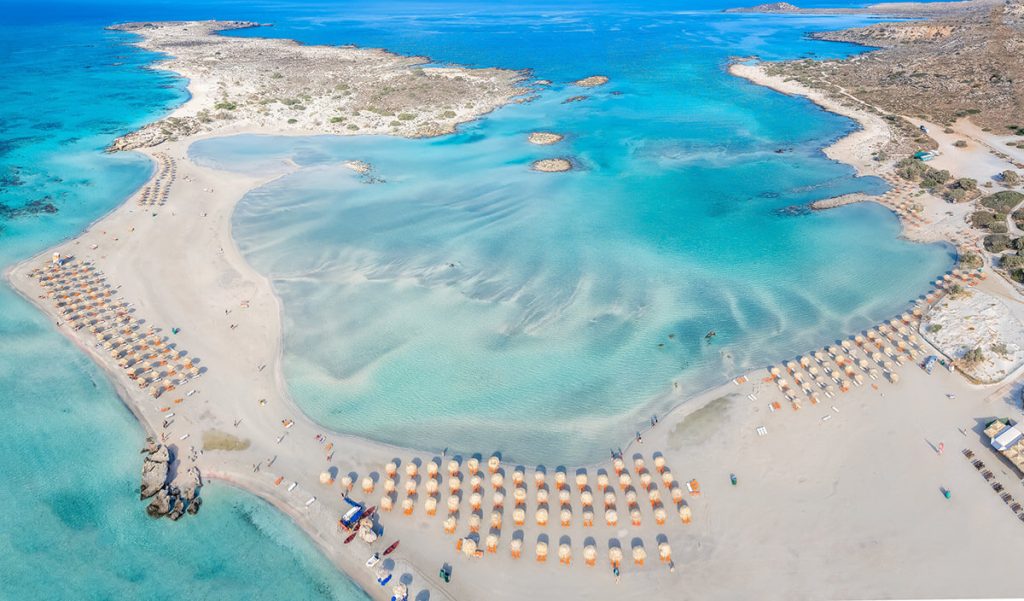
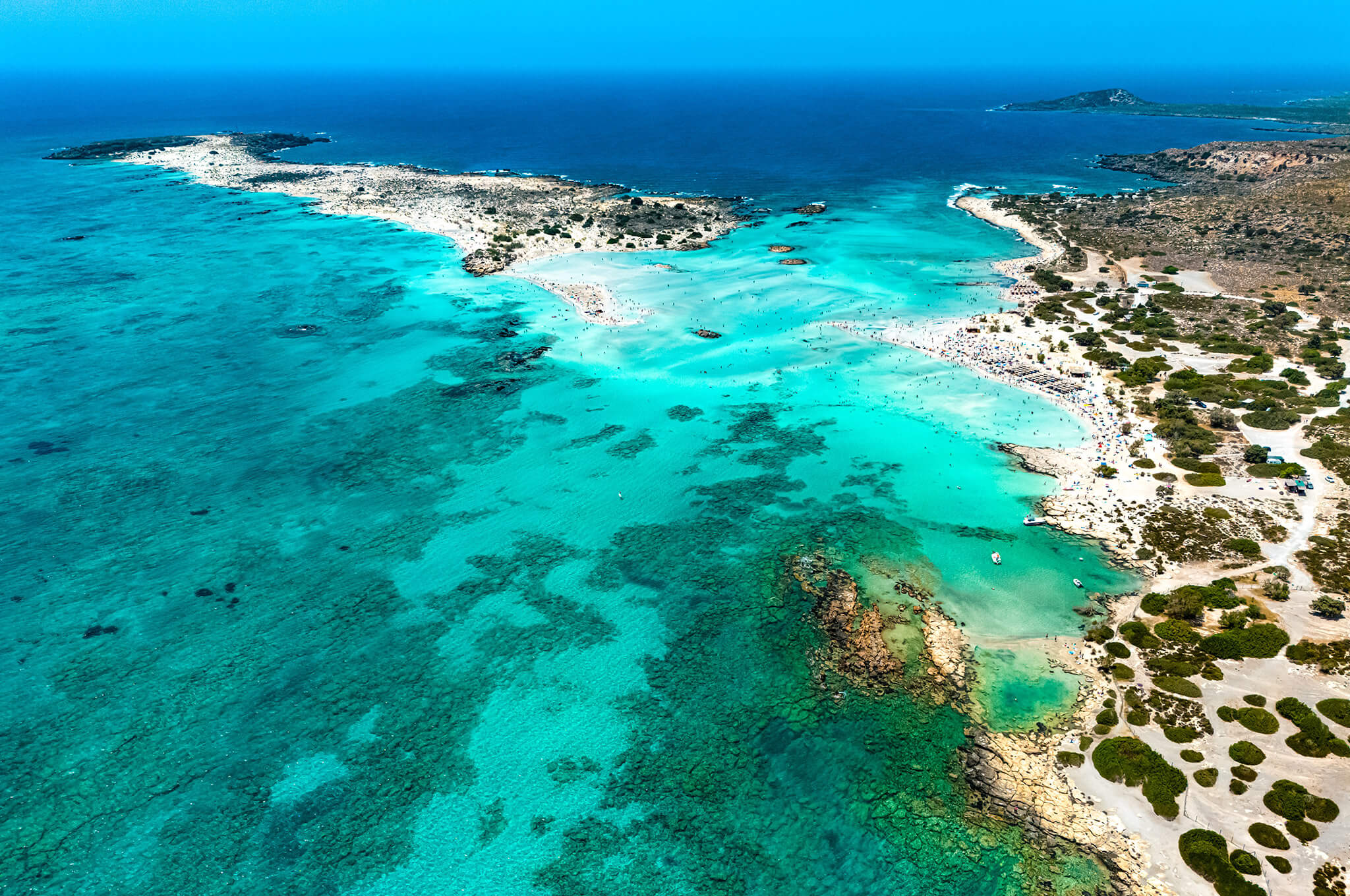
Elafonisi beach takes its name from the small island of Elafonisi, which lies just off the southwestern tip of Crete. The water between the beach and the island is very shallow, and you can usually walk across to Elafonisi.
The beach is famous for its white and pink sand, created by shells and coral, and its turquoise waters. There are several organised sections with sunbeds and umbrellas, and the beach attracts large numbers of visitors every day, so make sure you arrive very early in the morning.
You can drive all the way to the parking areas near the beach. If you want to keep the walk to a minimum, continue to the last car park before the beach.
If you haven’t rented a car, or simply want to avoid the traffic and parking, you can book this day trip instead. It includes bus transportation, a breakfast stop in the village of Topolia, around four hours at Elafonisi and then a lunch stop in the village of Elos. You can book your place here.
3. Falassarna
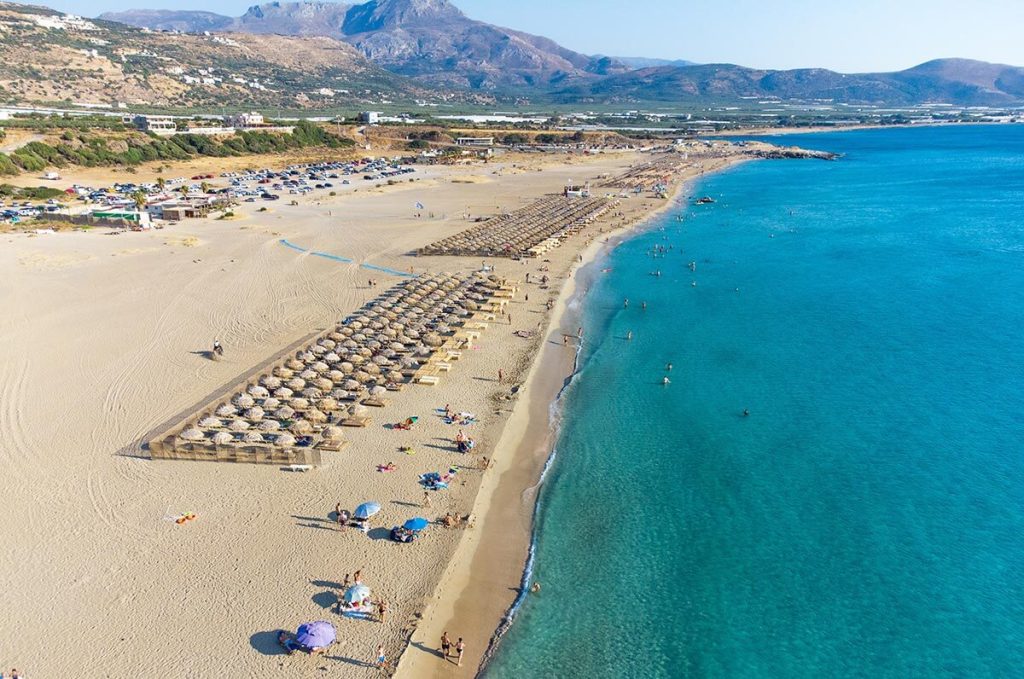
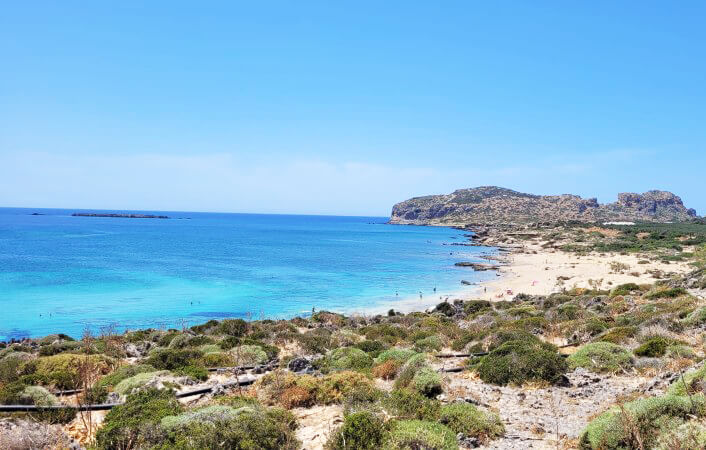
Many visitors consider Falassarna even more beautiful than Balos and Elafonisi. It is a large bay with five different beaches, mostly with sandy shores and clear turquoise waters that can be quite cold.
You’ll find both organised sections with sunbeds and umbrellas and plenty of quieter, unorganised areas where you can have more space to yourself. If you’re looking for somewhere peaceful, I recommend the area below Orange Blue Bar. If you prefer an organised beach with more atmosphere and music, head towards Liokalyvo Beach Bar.
Falassarna is around a one-hour drive from Chania city centre. Where you park will depend on which part of the beach you decide to visit.
I recommend avoiding Falassarna for swimming when there are strong westerly winds, as the sea can get very rough. If you’re into water sports, however, these conditions can be ideal for surfing. In this case, look for the Surf Island Falassarna spot.
4. Kedrodasos
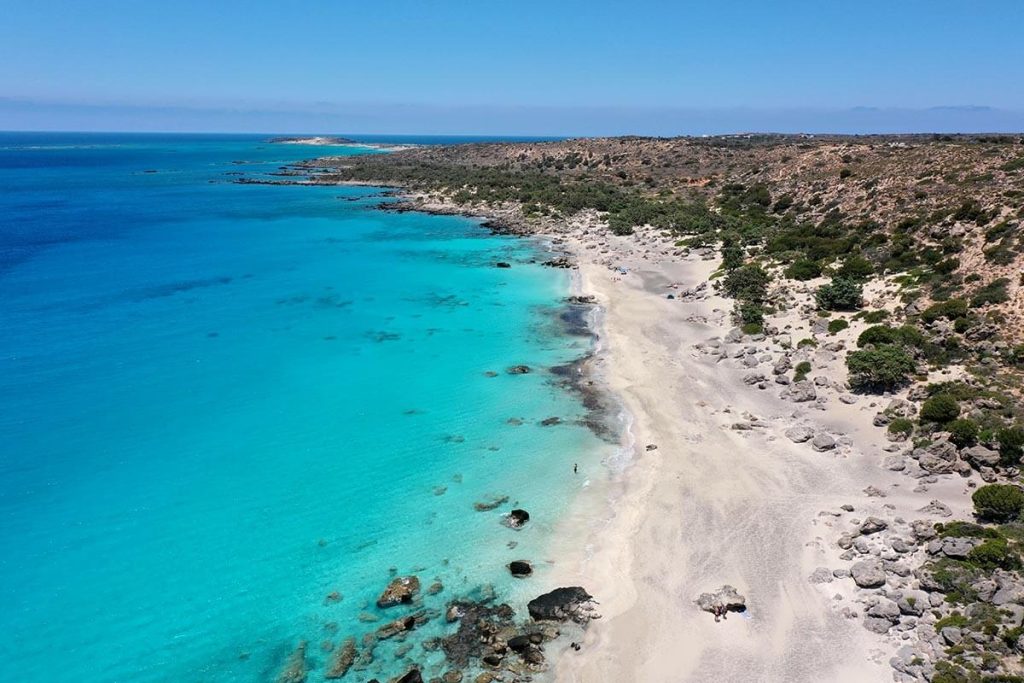
For many years, Kedrodasos was something of a hidden gem, although it has become much more popular in recent years. It lies on the southwestern coast of Crete, very close to Elafonisi.
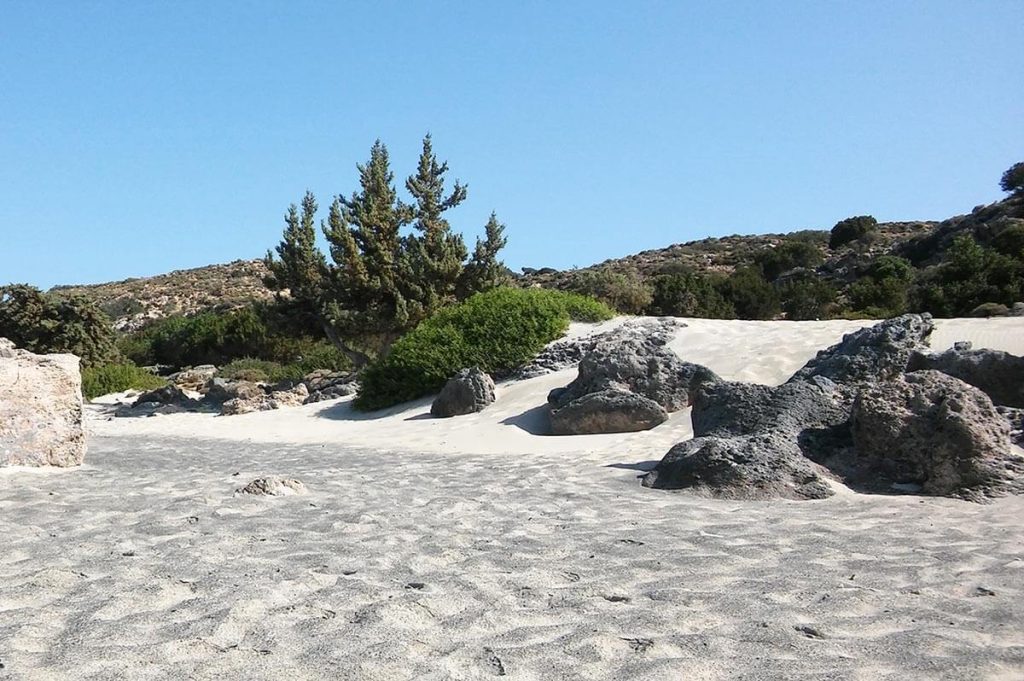
The beach has a mixture of white and dark sand and turquoise waters that are usually quite cold. What makes Kedrodasos so special, however, isn’t just the beach itself, but also the cedar forest and sand dunes directly behind it.
You can drive most of the way to Kedrodasos, but you’ll need to walk the final section. From where you leave your car, follow one of the trails leading down to the beach. The walk takes around 10–15 minutes, and I recommend wearing closed-toe shoes.
Kedrodasos faces south, so southerly winds can make the sea rough, while westerly winds can affect the beach too. In general, I would avoid visiting on any very windy day, as the wind blows the sand around and can make staying on the beach quite unpleasant.
5. Seitan Limania
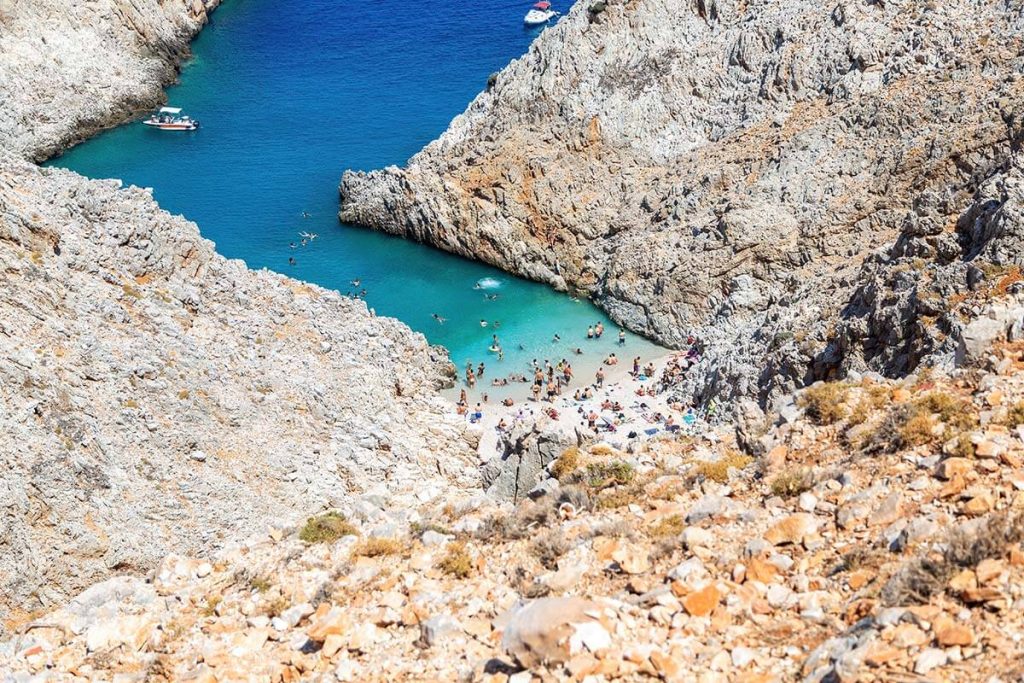
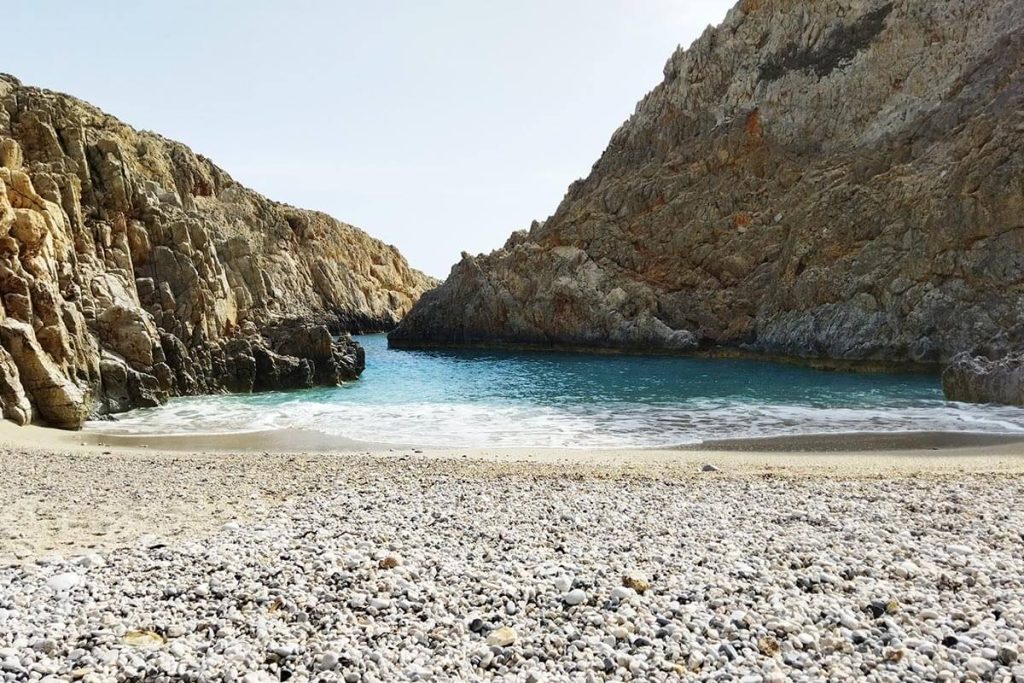
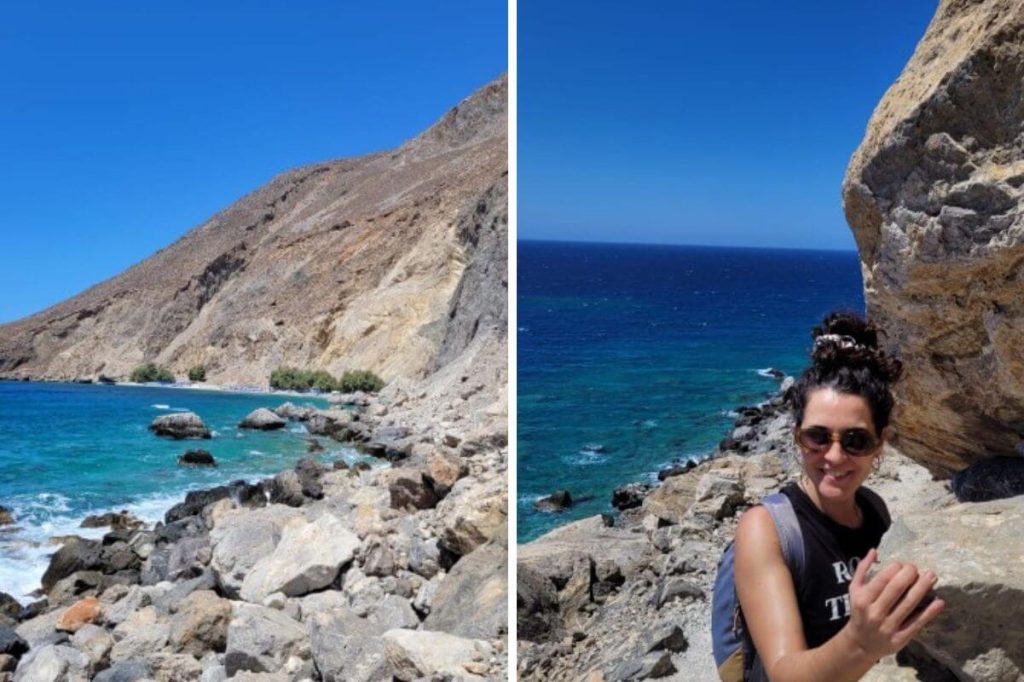
Seitan Limania, also known as Stefanou Beach, is one of the most unusual and most photographed beaches in Chania. It is a narrow beach surrounded by steep rock formations, with turquoise water and a mixture of fine white pebbles and sand.
The beach itself is very small, and because it has become so popular, it fills up extremely quickly.
To reach it, you’ll need to walk down a short but steep trail. You need a reasonable level of fitness, and closed-toe shoes are highly recommended. Alternatively, you can reach the beach by boat.
Because of its shape and location, Seitan Limania is relatively well protected from the wind and is often calm. However, very strong northeasterly winds can still make the sea rough.
6. Gialiskari
Gialiskari is one of the beaches near Paleochora and, in my opinion, one of the most beautiful in Chania. It has a mixture of fine pebbles and sand, along with crystal-clear water.
Although the water gets relatively deep, the beach is popular with families, and there are plenty of trees providing natural shade.
There is also a canteen that provides sunbeds. You can either sit right by the sea or further back under the shade of the trees.
Getting there is relatively easy. The road is paved as far as Paleochora, with a dirt road only for the final 2.5 km. There is a large parking area very close to the beach.
Gialiskari faces southeast, so it is relatively well protected from the northwesterly winds that are common in Crete.
7. Sougia
Sougia is a long, mostly pebbly beach with a few sandy sections and deep, crystal-clear water.
It stretches in front of the village of the same name, a laid-back seaside destination with beach bars, tavernas, restaurants and places to stay.
Most of the beach is unorganised, with only a small number of sunbeds on the western side, making it a good choice if you want plenty of space and a more relaxed atmosphere.
Sougia is also popular with nudists, particularly towards the eastern end of the main beach and on the smaller beach just beyond the rocks.
Access is easy, and you can drive right down to the beach. Since Sougia faces south, it can be a particularly good option on days with northerly winds.
8. Marmara
Marmara is a small beach in Sfakia, on the southern coast of Crete. It sits at the exit of Aradena Gorge, which gives the whole area a particularly dramatic setting.
The beach is pebbly, with deep, bright blue water. There are a few sunbeds and umbrellas provided by the taverna next to the beach. Marmara is also relatively well protected from the wind.
The main way to get there is by sea. You can travel to Chora Sfakion and then take a boat or water taxi to the beach.
There is also an alternative for those who prefer hiking. You can drive as far as Lykos Beach and then follow the coastal trail to Marmara, which takes around one hour on foot.
9. Glyka Nera
Glyka Nera is a beach on the south coast of Crete, in the Sfakia area, and can only be reached either by sea or via a fairly demanding hiking trail.
The beach is a mixture of pebbles and sand, with exceptionally clear and very cold water. There are a few sunbeds and umbrellas, but there is also plenty of free space if you prefer to bring your own umbrella.
You can easily combine a day at the beach with lunch, as there is a floating taverna at one end of the beach.
The easiest way to reach Glyka Nera is by boat or water taxi from Chora Sfakion. It’s a quick and hassle-free journey and avoids the difficult hike altogether.
If, however, you’re the kind of traveller who enjoys hiking and a bit of adventure, I recommend taking the trail to the beach. In that case, make sure you wear suitable footwear and avoid carrying too many things with you.
Glyka Nera faces southeast, which means it is protected from both northern and western winds.
10. Frangokastello
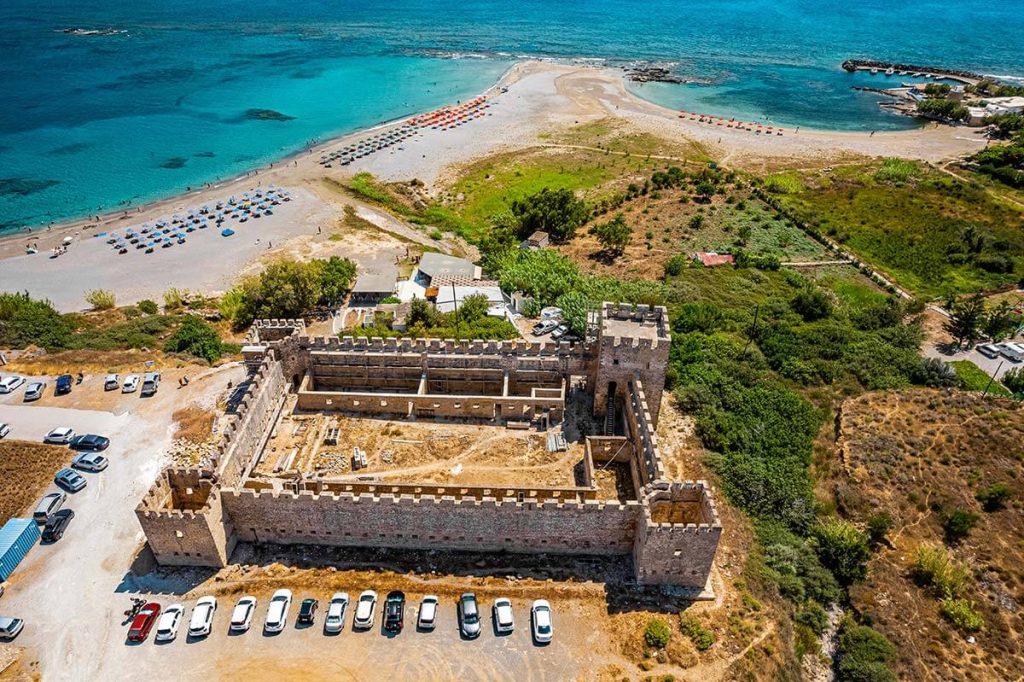
Frangokastello beach is located on the south coast of Crete, right next to the Venetian castle of Frangokastello.
It is fairly organised, although there is also plenty of free space if you prefer to bring your own beach gear. The beach is sandy, with clear blue and shallow water, making it a particularly good choice for families with young children.
I recommend avoiding it on very windy days, regardless of the direction of the wind, as the wind can blow the sand around and make sitting on the beach uncomfortable.
Access is easy and you can drive very close to the beach. There is plenty of parking, although it is still a good idea to arrive early in the morning, especially at weekends.
The truth is, the list of beautiful beaches in Chania could go on forever. But if it’s your first time here, these are the beaches I really think you shouldn’t miss. I hope you enjoy every swim and make some wonderful memories along the way!
👉 If you’re planning a trip to Chania with children, check out my detailed guide to the best family-friendly beaches in the area.